

Atmospheric Physics and Chemistry Group
We belong to
Institute for Marine and Atmospheric research Utrecht (IMAU)
Faculty of Physics and Astronomy
Utrecht University
RESEARCH THEMES
The APCG uses innovative measurement techniques and comprehensive computer programs to investigate on global trace gas and aerosol budgets, emissions from the biosphere and aerosol-cloud interaction. Individual projects target a wide range of research questions, as shown here. An important tool of our group is the measurement of reactive organic species and the isotopic composition of trace constituents, which we use to identify and quantify fluxes from individual sources and sinks. Although in the following the experimental and modeling themes are separated, in many subprojects we use an integral approach by combining measurements and modeling activities. This will become clear in the descriptions of several individual projects.Experimental research
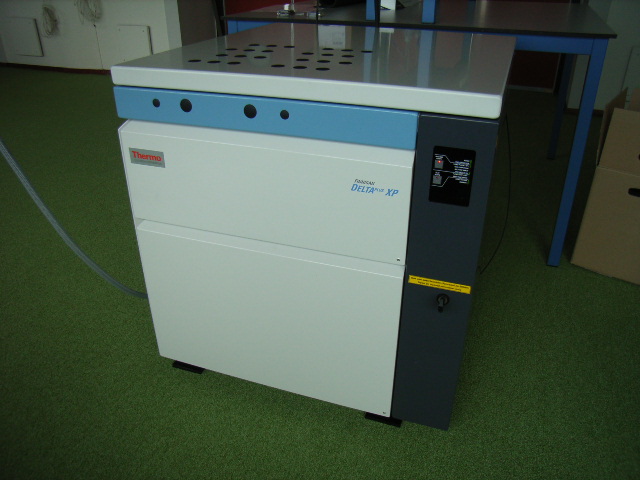
Progress in atmospheric research is dependent on reliable, precise and innovative measurements. Therefore, our group operates a large atmospheric chemistry laboratory with five isotope ratio mass spectrometers (IRMS), one proton-transfer-reaction time-of-flight mass-spectrometer (PTR-TOF-MS) and numerous sampling, extraction and preparation devices for isotope and aerosol studies. We are a very innovative laboratory in the development of new techniques for atmospheric research and constantly work on new measurement methods. We integrate students into the research program at an early stage via experimental thesis projects and student assistantships. Another part of our work is in the field, where measurements are made, or samples are collected, at different parts of the globe, often in the framework of large international projects.In general, we have two experimental focus areas where we are among the world leaders in the development and application of new instrumentation.
The investigation of atmospheric trace gas cycles with isotope techniques
Trace gases that are emitted from different sources usually have a slightly different isotopic composition. Therefore, isotope measurements can be used to quantify the emissions from the different sources. Also, when a trace gas is removed, the responsible removal reaction usually leaves a small fingerprint in the isotopic composition. Therefore, isotope measurements can provide information on individual source and sink processes, which are often not achievable by measurement of the concentration alone. Since this is a general property of isotope research, the isotope approach has a very wide range of applications, also outside of scientific research. In our group we use this technique to investigate the atmospheric cycles of many trace species.
Reactive organic trace gases in the atmosphere – pollution, emissions from the biosphere, and their role for aerosol formation
Due to their reactivity, most organic trace gases do not reach concentrations high enough to be relevant greenhouse gases. Yet, they are important players in the climate system for three important reasons: First, they control the oxidation capacity of the atmosphere which feeds back to the concentration of important greenhouse gases such as methane. Second, together with nitrogen oxides they control tropospheric levels of ozone. Besides being an important greenhouse gas, ozone is of concern because it causes respiratory illnesses and at elevated levels also cell damage in plants. Third, their degradation products contribute to the formation of fine aerosols. Aerosols reflect sunlight and therefore exhibit a cooling effect on the climate. They also serve as cloud condensation nuclei and thus feedback to the climate via several indirect aerosol-cloud effects.
We use chemical ionization mass spectrometry techniques to quantify reactive organic trace gases and their degradation products in the gas phase and in aerosols (condensed phase). Projects include laboratory studies in smog and plant chambers, field deployments in different regions covering the whole range from remote high mountain stations (Mt. Sonnblick, Austria), rural/polluted regions (CESAR site, Netherlands) to heavily polluted environments such as the Los Angeles basin in California, USA.
Atmospheric modeling
Computer models integrate the wealth of information that becomes available from measurements, and use this information to reproduce the atmospheric observations and help understand the underlying processes. Models exist at various stages of complexity, from simple box models to interactive global earth system models. The modeling activities in the APCG are centered on the following two themes.Aerosol-cloud interaction: microphysics and global effects
Clouds are an important factor in the Earth's radiation budget. Clouds reflect solar radiation and thus have a cooling effect. On the other hand, high cirrus clouds trap infrared radiation in the atmosphere which leads to warming, in a similar way as greenhouse gases. The first effect exceeds the second, so that the net effect of clouds is a cooling of the planet.
Clouds are a component of the Earth's hydrological cycle, acting as a sort of safety valve to keep the atmospheric burden of water vapor (an important natural greenhouse gas) within limits. Clouds are also directly linked to the biosphere and to surface characteristics. This is because cloud drops grow on aerosol, i.e., tiny particles that originate from natural processes (wind-blown desert dust and sea salt, volcanic eruptions, emssions from vegetation and plankton) and from human activities (fossil fuel burning, agriculture, traffic). The amount of aerosol influences the reflectivity and the potential for rain formation of a cloud.
Changes of the atmospheric composition and/or of the Earth's climate will result in a different occurrance and distribution of clouds and precipitation. In turn, this will directly affect the solar radiation available at the surface, the temperature and the biological activity, thus creating many possibilities for feedback loops within and inbetween different components of the climate system.
In view of the varying time and spatial scales involved in cloud formation, from tenths of micrometers to hundreds of kilometers and from seconds to days, and the multidisciplinarity involving physics, chemistry and biology, the study of clouds and their climate aspects is a very challenging one. Cloud research at IMAU focuses on aerosol-cloud interactions. We employ computer simulation models of varying complexity.
- the IMAU cloud parcel model; this represents in large detail the cloud microphysical processes, i.e., activation of aerosol to cloud drops, condensational growth, precipitation formation in aqueous phase chemistry. This model is applied in ongoing research and is also highly suitable for student projects.
- a 1D cloud column model with explicit microphysics, currently applied in a Ph.D. project (J. Derksen), see ongoing projects
- a global climate model with explicit representation of aerosol formation, transformation and removal (ECHAM5-HAM) with a cloud processing parameterization that is developed and implemented by IMAU.
Global greenhouse gas cycling and atmospheric chemistry
Understanding the atmospheric composition is ultimately expressed in the ability to model the composition. Modelling the atmospheric composition is a wide dicipline and within the IMAU we concentrate on
- the use of inverse modelling techniques to quantify emissions of e.g. CO, CH4, and CO2.
Surface and satellite data are used to constrain the emissions such that a best fit between model results and observations is obtained. We use the TM5 transport model, and its adjoint, in a 4DVAR modelling framework. The TM5 model has the capability to zoom in over regions of interest (e.g. Europe) - atmospheric chemistry and transport modelling
Again, the atmospheric chemistry transport model TM5 is used to model emissions, transport, and chemical transformation. Subjects range from the isotopic composition of H2 to the oxidizing capacity of our atmosphere.
Designed by M.S.

Last update: 04 January 2017