

Atmospheric Physics and Chemistry Group
We belong to
Institute for Marine and Atmospheric research Utrecht (IMAU)
Faculty of Physics and Astronomy
Utrecht University
STUDENT PROJECTS @ IMAU
The atmospheric chemistry and physics group offers several projects for bachelor and master students, in the following themes:
- measurements of trace gases and/or isotopes
- modelling of atmospheric processes and composition
If you’re interested in an experimental project, please contact Thomas Roeckmann (t.roeckmann [at] uu.nl) or Rupert Holzinger (r.holzinger [at] uu.nl). For modeling projects, please contact Maarten Krol (M.C.Krol [at] uu.nl).
A detailed description of the different research subjects of the group can be found in the research themes.
Student Projects on Measurements of Trace Gases and Isotopes:
Investigating the isotope enigma of respired CO2
Laboratory experiments
Supervisor: M. Hofmann, T. Röckmann
Emissions of trace gases (CO, H2, CH4) from organic matter, and their isotopic composition
Field and laboratory experiments; laboratory measurements
Supervisor: E. Popa, T. Röckmann
Background. Living and dried plants have been shown to emit CO, H2 and CH4 among other gases, most likely due to thermal and radiation induced decomposition of organic matter. For example, recent experiments at IMAU showed large amounts of CO emitted from plants, and that emissions are much larger for senescent or dead plant material than for living green plants.
This is a general project that can be split in various subprojects for different gas species or situations. Depending on season, it can involve field sampling and/or laboratory experiments. Possible research questions are: characterizing the isotopic composition of trace gases emitted, magnitude or emissions in different stress situations (e.g. UV radiation, leaf damage, drought); relation between the emissions of different gas species.
Method. Samples will be taken from living plants (e.g. tree branches) during day and night. Living and dead parts of plants can additionally be incubated in the laboratory, under different conditions of temperature and light. CO/ CH4/ H2 and its isotopic composition will be analyzed; if possible also CO2 will be analyzed from the same samples, in order to determine the ratio of trace gas emissions to respiration.
Emissions of CH4 from ditches – mobile analyzer
Field measurements and sampling; laboratory measurements
Supervisor: E. Popa, T. Röckmann
Background. Small ditches surrounding e.g. grass fields have been shown to emit large quantities of CH4. The CH4 is likely coming from anaerobic production in water. Methane plumes should be detectable around ditches when using a mobile, relatively fast methane analyzer.
Method. Set up the Picarro analyzer on a mobile platform. With this mobile analyzer, and using a flexible inlet connected to a rigid holder, go around to ditches close to de Uithof, and try to detect methane plumes. Take flask samples from plumes, and perform isotopic analysis at IMAU.
Emissions of CH4 from ditches – chamber method
Field sampling; laboratory measurements
Supervisor: E. Popa, T. Röckmann
Background. Small ditches surrounding e.g. grass fields have been shown to emit large quantities of CH4. The CH4 is likely coming from anaerobic production in water.
Method. Adapt a soil chamber for use on water. Take flask samples from this water chamber, and analyze them at IMAU in order to quantify the CH4 emissions and isotopic composition. Different conditions should be sampled – different ditches, with/without plants, with/without sun etc. Additional measurements like water temperature could be used to analyze the data in more detail.
Detection of methane plumes from emission hotspots
Field measurements and sampling; laboratory measurements
Driver’s license needed
Supervisor: E. Popa, T. Röckmann
Background. Methane is one of the major greenhouse gases, and it is often emitted in large quantities from small areas, for example ruminant stables or landfills. These local sources are difficult to quantify, but they make an important contribution to the total emissions.
Method. A fast CH4 analyzer (Picarro) will be installed in a van, creating a so called “mobile lab”. The analyzer response time is short enough that emission plumes can be detected while driving. When a plume has been detected, samples will be taken for laboratory analysis of the CH4 isotopic composition. The method will enable both the localization of emission hot spots, and the source attribution using the isotopic analysis.
Student Projects on Measurements of Aerosols:
Aerosols are small particles in the air with a diameter of 0.01-10 micrometer. They control important feedback mechanisms in the climate system for two reasons: (i) they scatter sunlight and thus directly influence the energy budget of the earth system; (ii) they serve as cloud condensation nuclei and thus control cloud properties such as reflectivity and cloud lifetime. While there is good qualitative understanding on aerosol – climate processes, it is extremely hard to quantify the overall effect of aerosol pollution on the current climate change. This is the major reason for the large uncertainty of climate projections until 2100.
Improving Aerosol Analysis
Supervisor: R. Holzinger
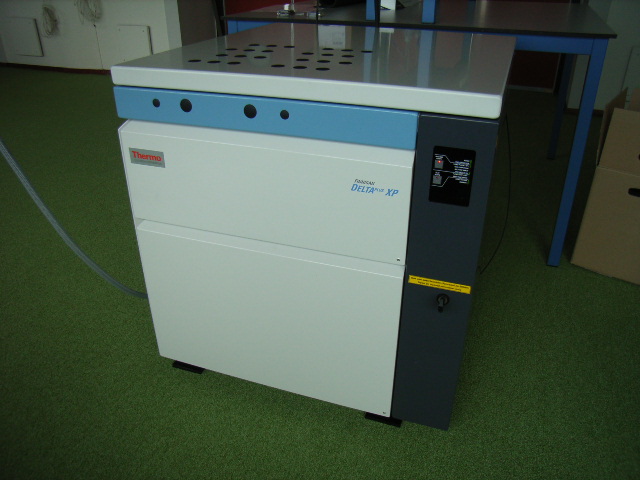
At the IMAU we operate a unique mass spectrometer to analyze organic aerosols: the thermal-desorption proton-transfer-
reaction mass-spectrometer (TD-PTR-MS). This is a very sensitive instrument that can measure the composition of organic aerosols at a
molecular level. Typically more than 500 organic species are detected in ambient aerosol samples. In this project you
will analyze commercially available aerosol mixtures (standards) that have a well defined composition and the information
from this project can be used to improve the interpretation ambient aerosol measurements.
Atmospheric nucleation: simulating the molecular self organization under different atmospheric conditions
Supervisor: R. van Roij (ITF), R. Holzinger (IMAU)
New particle formation (NPF) is a common process in the atmosphere. Under certain conditions organic or inorganic
molecules in the atmosphere condense on pre-existing nanoclusters (< 2-3 nm) and cause growth so that eventually new
aerosols exist with a diameter of 40 nm and larger. Most aerosols in the atmosphere are not emitted directly but produced
during a NPF event. There is very limited understanding on the physicochemical processes that operate on these
nano-scales, yet, NPF events are at the basis of the so important but poorly understood aerosol-climate effects.
The processes leading to NPF resemble the nucleation-and-growth of self-organizing nanoparticles in liquids, for which theory and simulation methods have been developed. This is a joint project with the Institute for theoretical physics (ITF). The theory of self-organizing nanoparticles in liquids will be applied to the atmospheric situation.
Analysis of Ancient Aerosols Trapped in Ice Cores
Supervisor: R. Holzinger(IMAU), M Schwikowski (PSI, Zwitserland)
Organic compounds constitute a major fraction of aerosols. The organic material originates from the biosphere either
due to direct plant emission or due to vegetation fires. During the last century pollution became another important
source of organic aerosol. Aerosols deposit on the surface and are thus archived in the ice of glaciers and the ice caps.
In this project you analyze ice samples from the Fiescherhorn Glacier in the Swiss alps. The samples cover a period of
several hundred years. The change in composition and amount between the industrial and preindustrial period can be studied.
Organic Aerosols over the Atlantic Ocean
Supervisor: R. Holzinger, U. Dusek
Over the land surface organic compounds constitute the most important fraction of aerosols. Much less is known about
the significance of organic compounds in aerosols over the Oceans. The organic material may originate from the Ocean
biota or from continental emissions (either biogenic or pollution). During two ship cruises in the Atlantic Ocean, we
collected ~60 aerosol samples on the German research vessel ‘Polarstern’. In this project you will analyze
the aerosol samples with two techniques: (i) with TD-PTR-MS you will quantify hundreds of individual aerosol
constituents, and (ii) with IRMS you will measure stable carbon isotope ratios of the bulk organic carbon. The goal of
the project is to learn more about the origine of marine organic aerosol. Is it mostly from pollution or naturally
produced from the marine biota?
Organic Aerosols in rural and urban areas in the Netherlands
Supervisor: U. Dusek, R. Holzinger
Aerosols are not only important for climate change, but also a serious pollution problem with many adverse health
effects. The Netherlands has one of the highest levels of aerosol pollution in western Europe, which can reduce the
average life span by more than one year. Especially the organic fraction of the aerosol contains many toxins and
allergens and we should know more about its composition and sources. During April, May and June 2011, aerosol filter
samples were taken in the city of Rotterdam and in the rural area of Cabauw nearby. The goal is to study the
differences of the urban and rural organic aerosol and to estimate how much organic mass is added to the regional
aerosol by the city of Rotterdam. The techniques used for the filter analysis are: (i) with TD-PTR-MS you will quantify
hundreds of individual aerosol constituents, and (ii) with IRMS you will measure stable carbon isotope ratios of the
bulk organic carbon.
The Link between elemental carbon (EC) and black carbon (BC) in aerosols
Supervisor: R. Holzinger (IMAU), Bas Henzing (TNO), Aleksandra Jedynska (TNO)
Particulate Emissions from road transport are relevant with respect to climate and human health. A fraction of the material is strongly light absorbing and is considered a short lived climate forcer. The amount of these aerosol particles is given as a mass concentration black carbon (BC). Light absorption is obtained by measuring the rate of change of light transmission through a filter that continuously collects aerosol by pulling a calibrated amount of air through the filter. BC is calculated from this light absorption by combining it with the mass specific absorption coefficient, i.e. the amount of light absorption per unit mass. For health studies the same aerosol is generally analyzed on its elemental carbon content (EC). EC is also given as a mass concentration. It is measured by a thermal optical method. The thermal part is burning the aerosol at various temperatures. First, in an inert atmosphere the so-called Organic Carbon evolves from the filter. In a second step the aerosol is heated in air and EC is measured. In the first step some OC is not converted into CO2 but forms a black solid substance. To avoid interpreting this substance as EC, a correction method is introduced that is based on a light transmission measurement. Before starting the first stage light transmission is measured. During the heating stages transmission goes down. In the second stage the pyrolitic carbon is burned and filter turn lighter again. Pyrolitic carbon is OC, the split between EC and OC is marked by the moment when the transmission is back at is original value. Generally BC and EC worlds are separated between climatologists and people interested in human health, respectively. The transmission measurement in the EC-OC protocol potentially provides an important link between both worlds. We are looking for a student who wants to investigate this link by analyzing existing data. At TNO supervision will be given by a BC specialist (Dr Bas Henzing) and EC specialist (Aleksandra Jedynska).
Student Projects on Modelling of Atmospheric Processes and Composition:
Simulating aerosols from the Pinatubo eruption
Model simulations and/or analysis
Programming experience recommended
Background: Volcanic eruptions have significant effects on climate and atmospheric chemistry. They emit sulfur dioxide, which condenses to form stratospheric aerosols that scatter solar radiation. By simulating volcanic eruptions using computer models, we can learn about the aerosol processes in volcanic plumes, and evaluate the impact of large volcanic eruptions on the atmosphere. In this project we focus on the eruption of Mt. Pinatubo in 1991, the largest eruption in the past century.
Method. We have simulated this eruption in the atmospheric chemistry model TM5, including the aerosol formation, growth, and transport around the globe. In this project, you will analyze model output and evaluate the performance of the model in simulating Pinatubo aerosols against observations. You will also test options to improve the simulation results by changing some model parameters, such as model resolution and aerosol representation.
The effect of Pinatubo eruption on climate
Model simulations and analysis
Programming experience needed
Supervisor: N. Banda, M. Krol(IMAU), T. van Noije (KNMI)
Background: Volcanic eruptions have significant effects on climate and atmospheric chemistry. They emit sulfur dioxide, which condenses to form stratospheric aerosols that scatter solar radiation. By simulating volcanic eruptions using computer models, we can learn about the aerosol processes in volcanic plumes, and evaluate the impact of large volcanic eruptions on the atmosphere. In this project we focus on the eruption of Mt. Pinatubo in 1991, the largest eruption in the past century.
Method. After the eruption of Pinatubo, the global mean temperature decreased for a few years by about 0.5 C due to the scattering aerosols. In this project you will simulate the Pinatubo eruption in the EC-Earth climate model, and evaluate the modelled temperature against measurements. Optionally, you can also assess the impact of Pinatubo on other climate variables, such as radiation balance, precipitation or atmospheric chemistry.
How did sulfur deposition from the Pinatubo eruption affect methane emissions from wetlands?
Analysis of model output
Programming experience recommended
Background: Volcanic eruptions have significant effects on climate and atmospheric chemistry. They emit sulfur dioxide, which condenses to form stratospheric aerosols that scatter solar radiation. By simulating volcanic eruptions using computer models, we can learn about the aerosol processes in volcanic plumes, and evaluate the impact of large volcanic eruptions on the atmosphere. In this project we focus on the eruption of Mt. Pinatubo in 1991, the largest eruption in the past century.
Method. Methane is produced naturally by microorganisms in wetland areas. Studies have shown that sulfur deposition inhibits this important methane source. Sulfur deposition from the Pinatubo eruption could thus have affected the methane wetland emissions. Using simulated sulfate aerosol deposition from the Pinatubo eruption and methane wetland emission data, you will calculate the reduction in methane emissions following the eruption.
Effects of climate change on photochemical ozone formation
Model simulations and analysis
Programming experience recommended
Background: Climate change has various effects on the photochemistry. For instance, most reactions proceed faster when temperature increases. In this project you will use a conceptual model that simulates a growing atmospheric boundary layer (CLASS). The atmospheric model is coupled to a land surface scheme that simulates the surface energy balance, the uptake of CO2 by vegetation, and the evaporation from the surface and by evapotranspiration.
Method. Using model simulations, you will investigate how temperature and CO2 changes affect the chemistry within the convective boundary layer (CBL). For instance, you will investigate how CO2 influences the behavior of the plant’ stomata, evapotranspiration, the growth of the CBL, and ultimately the concentrations of atmospheric pollutants.
Building a diffusion model for interpreting gas flux measurements
Model simulations and data analysis
Supervisor: N. Banda, E. Popa, T. Röckmann
Background: Atmospheric hydrogen (H2) can be both produced and consumed by bacteria in the soil. To investigate these processes, measurements of the hydrogen flux and its isotopic signature were made at the atmosphere/soil interface using a gas chamber. The chamber was placed on top of the soil, and the evolution of hydrogen concentration and isotopic signature in the chamber was monitored.
Method. A model is needed in order to find the separate contributions of the soil source and soil removal to the measured flux, and their isotopic signatures. The goal of this project is to build such a model, taking into account the depths at which these processes occur, and the diffusion of hydrogen within the soil. This model will be further used to interpret measurement data.
Designed by M.S.

Last update: 04 January 2017